
Cellar Profile
Established in 1984, Salcheto is the creation of viticulturist and winemaker, Michele Manelli. Michele’s genuine passion for refined and delicate wines has propelled this tiny estate into one of Montepulciano’s top producers. His mission is simple and clear: seek quality, both in the vineyard and the cellar, with an unfailing respect for the character of the grapes. Manual collections, sulfite-free vinifications, native yeasts, "Tuscan Governo" method and large botte and tonneaux barrels are the tools used to produce wines that are elegant and soft, with pronounced aromas and uniqueness for each vintage released. Though lesser known than Chianti Classico and Brunello di Montalcino, Vino Nobile offers incredible value and an earlier drinking window for Tuscan wine lovers. Geographically situated between its more famous neighbours, Vino Nobile’s style takes the best from each—bright and supple, concentrated and powerful. Salcheto is an ‘off the grid’ winery operating one of the wine world’s only energy-independent cellar systems. Along with countless other environmental initiatives, this led to Salcheto being named Gambero Rosso’s Sustainable Winery of the Year in 2014. Their 50 hectares of organically- and biodynamically-farmed vines are planted with Prugnolo Gentile (Sangiovese), Canaiolo, Mammolo, Colorino, Merlot and Trebbiano. Their ‘Obvius’ lineup offers a clean, modern style of natural wines made from, as Michele puts it, ‘grapes only’.
Region
Vino Nobile di Montepulciano is one of Italy's classic red wines and has unquestionably helped Tuscany retain its privileged place on the world wine map. It comes from the vineyards which surround Montepulciano, a picturesque hill town 40 km southeast of Siena, in southeastern Tuscany. The key grape variety grown here is Sangiovese (known locally as Prugnolo Gentile). According to DOCG rules, to be labeled as Vino Nobile di Montepulciano a wine must come from vineyards on the hills which surround Montepulciano. This area is made up of slopes reaching 250–600 masl in altitude, located between two rivers – the Ocria and the Chiana.
Vineyard
Coming entirely from the 15 hectare 'Salcheto' vineyard, each bottle of the Vino Nobile is made from 1 plant of Prugnolo Gentile. These vineyards sit between 350 and 450 masl. The soil has a large portion of blue and gray clay in its composition, along with a large amount of sand. This allows for great development of primary fruit flavours. Vintage 2022 was marked by extreme heat and drought, however the ideal conditions during the end of season brought freshness and balance to the wines.
Winemaking
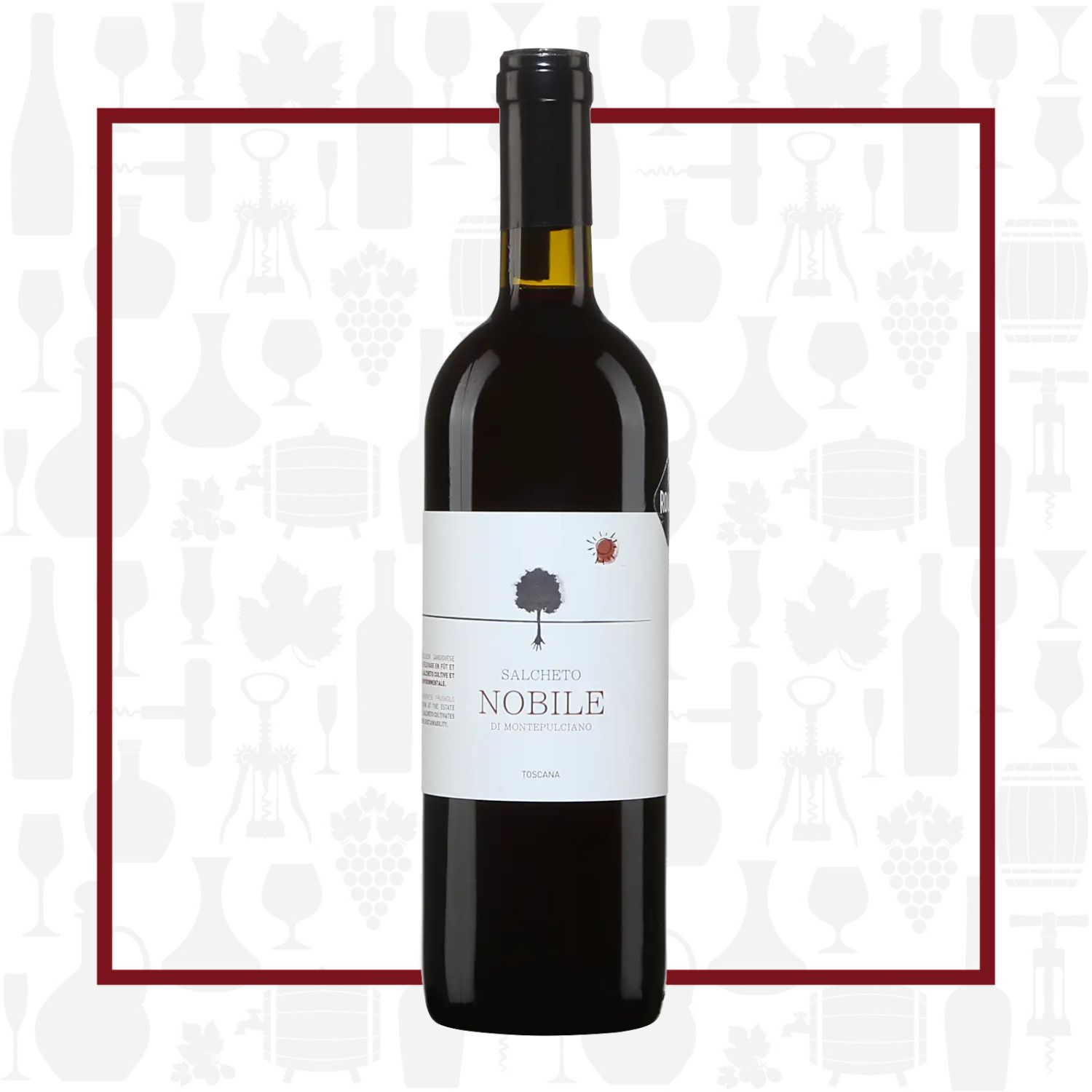
Crafted from organically-grown, 100% Prugnolo Gentile (a Sangiovese clone). One bottle per plant. Fermented in wood and matured for 18 months in oak barrels (70% large botte, 30% smaller tonneaux) followed by six months of bottle refinement.
Tasting Notes
Fresh and structured, with black cherries, tea leaves and raw cocoa beans on the aromatic nose. Chewy and rich, but approachable and very clean. Dark berry and plum flavours, with earthy undertones. The structured, medium-full body has fine, supportive tannins, lively acidity and a long, savoury finish. Drink now or hold. Pair with Tuscan pasta dishes, roasted red meats, game or aged cheeses.
Varieties
Sangiovese is the most widely-planted grape variety in Italy. Virtually synonymous with the red wines of Tuscany and all the romanticism that goes with the territory, Sangiovese is the core constituent in some of the great names in Italian wine. It is prized for its high acid, firm tannins and balanced nature. Savoury flavours of dark cherries and black stone fruit are characteristic and may be backed by secondary notes of tomato leaf and dried herbs. The use of oak has become more popular and this coaxes richer flavours from the grapes, tending toward plum and wild raspberry.